Athlete Development Tracking: Tests and Reporting Guide
Measure your gymnastics athletes' flexibility, strength, balance and coordination development with systematic tests and automatic reports. Present data-driven progress to parents and base your coaching decisions on numbers.
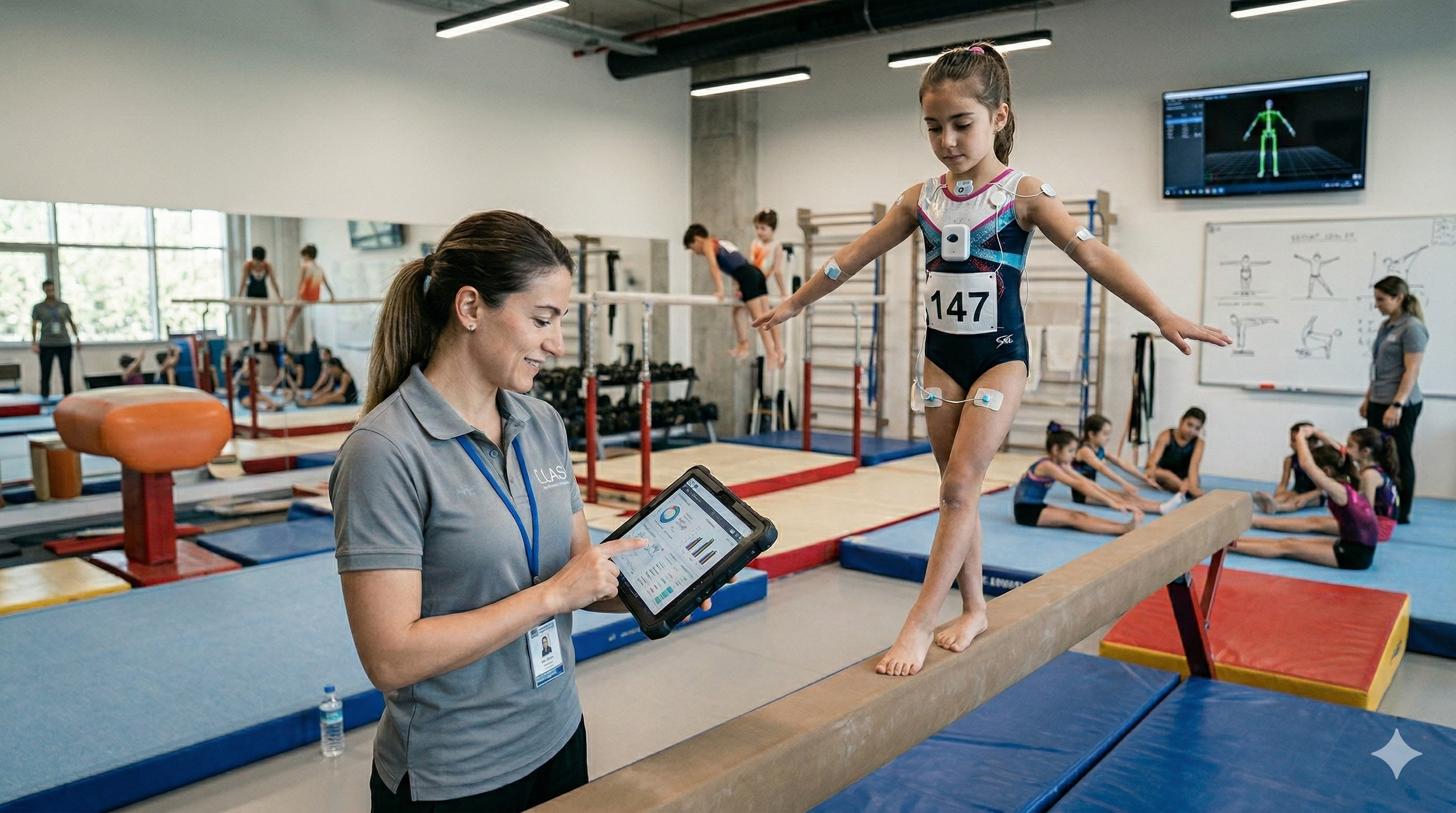
What Will You Learn in This Guide?
- Which development tests are applied in gymnastics and how they are measured
- Differences by branch in athlete performance measurement
- How to set up a digital athlete reporting system
- How to effectively present development reports to parents
- How coaches can integrate test results into training plans
- Detecting when an athlete hits a plateau through periodic comparison
- Concrete benefits of switching to digital development tracking with QReserve
Table of Contents
- 01What is Athlete Development Tracking?
- 02Why Should You Apply Systematic Tests?
- 03Core Test Types in Gymnastics
- 04Development Evaluation by Branch
- 05Digital Athlete Development Tracking System
- 06Effective Reporting to Parents
- 07Integrating Test Results into Training
- 08User Experiences
- 09How to Get Started in 4 Steps?
- 10Athlete Development Tracking with QReserve
What is Athlete Development Tracking?
Athlete development tracking is the systematic process of measuring and recording a gymnastics athlete's physical capacity, technical skills and coordinative qualities with standardized tests at regular intervals, and then comparing this data over time. Its purpose is not just to reveal where the athlete is, but where they are going and how fast they are getting there, in concrete numbers.
In many gymnastics clubs in Turkey, athlete development evaluation still relies on the coach's observation and personal impressions. While this approach works for experienced coaches, it creates a major problem: when talking to a parent, you cannot support the statement 'your child is doing very well' with concrete data. A digital athlete development tracking system closes this gap.
Core Definition
Athlete development tracking = Standard test + Digital recording + Automatic comparison + Parent report. When all four components are together, coaching becomes both stronger and more transparent.
Why Should You Apply Systematic Athlete Development Tests?
In our conversations with coaches, the dilemma we hear most often is: 'I know the athlete is developing but how do I explain this to the parent?' or 'Which athlete has hit a plateau, which one is still in active development?' Systematic athlete performance measurement extracts the answers to these questions from the data.
Real Problems Experienced Without Systematic Testing
Parent distrust and questioning
There is no concrete answer to 'My child has been here for 6 months, what has changed?' The parent's trust is shaken and the decision to switch clubs comes to the fore.
Delay in plateau detection
The athlete stops developing for a certain period but the coach doesn't notice this without systematic data. An unproductive training process can continue for months.
Training plan is based on intuition rather than data
Who is the group with the weakest flexibility, who stands out in strength? Without this information, grouping and training goals remain subjective.
Loss of institutional memory
When the coach changes, the athlete's past performance data is lost. The new coach has to start from scratch, and the athlete takes a step back.
Core Test Types in Gymnastics
The gymnastics athlete development test must measure not just one physical quality, but the athlete's holistic capacity. The test categories below form the basic building blocks of gymnastics performance, and each is managed as a separate module in the digital system.
Flexibility Tests
— The Foundation of Gymnastics
- Hamstring flexibility (sit-and-reach test, in cm)
- Shoulder and chest openness (bridge test angle)
- Front split and side split (in degrees)
- Ankle mobility (plantar flexion angle)
- Horizontal flexibility (arabesque angle)
Strength Tests
— The Engine of Performance
- Push-up count (upper body strength)
- Sit-up count (abdominal endurance)
- L-sit hold duration (static strength)
- Single-leg squat (leg strength and balance)
- Hang hold duration (grip and back strength)
Balance Tests
— The Key to Safe Technique
- Single-leg balance duration — eyes open (seconds)
- Single-leg balance duration — eyes closed (seconds)
- Balance beam stepping score
- Y-balance test (anterior, posterolateral, posteromedial)
- Overhead arm balance hold duration
Coordination Tests
— The Quality of Movement
- Rhythm test (hand-foot coordination with metronome)
- Cross-pattern coordination (seconds)
- Peripheral awareness test (multiple object tracking)
- Reaction time test (milliseconds)
- Eye-hand coordination (catch-throw test)
Coach's Note
For test results to be meaningful, each test must be applied under the same conditions (same time, same warm-up protocol, same measuring tool). QReserve's test templates guide the coach at every step, guaranteeing consistency.
Athlete Development Evaluation by Branch
Not all gymnastics branches require the same development tests. While strength and spatial awareness come to the fore in artistic gymnastics, flexibility and rhythm perception are decisive in rhythmic gymnastics. Applying branch-specific test protocols provides much more meaningful feedback to both the athlete and the coach.
| Branch | Priority Test Areas | Key Metric |
|---|---|---|
| Artistic Gymnastics | Strength, flexibility, spatial awareness, salto technique | L-sit duration, bridge angle, horizontal balance |
| Rhythmic Gymnastics | Flexibility, rhythm perception, hand skills, acrobatic elements | Front split angle, rhythm test score, arabesque height |
| Acrobatics | Strength, balance, trust, synchronization (pair/group) | Static strength, synchronization score, balance duration |
| Trampoline | Spatial awareness, height, coordination, reaction time | Jump height, reaction ms, error count |
| Children's Gymnastics (4-7 years) | Motor skills, balance, coordination, game-based tests | Motor skill score, transition to balance duration |
How Does a Digital Athlete Development Tracking System Work?
The difference between paper-based athlete development tests and a digital athlete development tracking system is not just a tool difference; it is a fundamental difference in approach to how you use the data. The digital system converts raw test data into instant insight.
Paper System vs Digital Athlete Tracking System
Coach Time Savings
In the paper system, data entry, chart drawing and report preparation for a test period takes an average of 3-4 hours. In the digital system, all of this is completed in real time during the test. The coach just conducts the test; reporting belongs to the system.
Automatic Comparative Chart
An inter-period development chart is automatically created for each athlete. The 3rd period flexibility test can be compared with the 1st period result with a single click. Objective evaluation based on data rather than intuition becomes possible.
Institutional Memory is Protected
Even if the coach changes, all of the athlete's test history is securely stored in the system. The new coach grasps the athlete's two-year development trajectory within minutes. The athlete doesn't have to start from scratch.
Plateau Alert System
If there is no progress in a certain metric over two consecutive test periods, the system automatically sends an alert to the coach. When the athlete hits a plateau, proactive rather than reactive intervention becomes possible.
Group Comparison and Segmentation
All athletes in the same age group are shown comparatively. The bottom 25% group in flexibility is immediately identified and the training program can be shaped accordingly.
Effective Athlete Development Reporting to Parents
The athlete development report doesn't just measure the athlete's development; it also measures the parent's trust in your club. Parents pay for months and wonder if their child is really learning anything. A systematic and transparent athlete reporting system presents the answer to this question with data.
Visual Development Chart
Radar chart and line chart for each test period — parents see direction, not just numbers.
Periodic Comparison
Side-by-side comparison table with previous period — 'last season 42 cm, this season 58 cm' concrete progress.
Goal Tracking
The period goal set by the coach and how much of the goal was achieved is shown as a percentage.
Automatic Notification
When test results are entered, the parent is automatically notified via WhatsApp and email.
What Should a Good Athlete Development Report Include?
- ✓ Score for each test category and difference from the previous period
- ✓ Visual development chart (to see the athlete's direction at a glance)
- ✓ Coach's brief comment ('Made a big leap in flexibility this period')
- ✓ Goals set for the next period
- ✓ The athlete's position relative to age group average (optional, anonymous)
Integrating Test Results into the Training Plan
The real value of the athlete development test is not in sharing the report with the parent, but in carrying the test data to the planning of the next training period. Data-driven training planning is one of the coach's most powerful tools.
Test → Analysis → Plan Cycle
Weak Point Detection
After test results are entered into the system, each athlete's lowest-scoring category is automatically highlighted. The coach can also see the group's collective weak points from a single screen. For example: 'This season 60% of the 8-10 age group has a low balance score.'
Goal Setting
By comparing the current score and branch-specific reference values, realistic goals for the next period are determined. The system allows the coach to digitally communicate the goals to the athlete and parent.
Grouping and Differentiation
Athlete groups are reorganized based on test data. The group developing fastest in flexibility is integrated into the competition program, while athletes with slower development are given specially planned supporting training.
Periodic Evaluation
The tests applied in the next test period objectively reveal how close the goal has been reached. Successful development motivates the coach, athlete and parent. Insufficient development is evaluated as a signal for a method change.
What Do Coaches and Parents Say?
Real experiences from clubs using QReserve's digital athlete development tracking system:
"I no longer describe test results over the phone. The parent opens the panel and sees with their own eyes. We don't need to explain things like 'Flexibility increased 14 cm compared to last season', the chart says everything."
"Before, my coaches would spend 2 days preparing reports during test periods. Now the system makes the report ready as soon as the test is done. We now spend those two days on training."
"I open my daughter's development chart at breakfast every morning. Seeing how much she progressed in each test also increases her motivation. This is the only club that does this, that's why we continue."
How to Switch to Digital Athlete Development Tracking in 4 Steps?
Switching to digital athlete development tracking with QReserve does not disrupt your existing training routine. The system guides the coach step by step, so no technology experience is needed.
From First Test Period to Automatic Report: 4 Steps
Select a Branch-Appropriate Test Template (10 minutes)
Select the appropriate template for your club's branch from the ready-made test templates in the QReserve panel. Customize the template by adding your own test items if desired.
Enter Test Day Results into System (during the test)
The coach enters each athlete's score into the system via phone or tablet during the test. No need for paper notes, scoring criteria are visible on screen.
System Instantly Generates Report (0 minutes)
When the test is completed, an individual development report and group comparison report are automatically ready for each athlete. Chart, table and comparison with the previous period are included.
Parents See Instantly from Their Panel (0 minutes)
Parents immediately see their children's development report in their own panel. The system also sends automatic notifications via WhatsApp and email. The question 'When will the reports be ready?' becomes a thing of the past.
Digital Athlete Development Tracking with QReserve
QReserve Gymnastics' athlete development tracking module was designed starting from the real needs of gymnastics clubs. Unlike general sports software, every feature is designed with the workflow of a gymnastics coach on test day in mind. Gymnastics Club Software page to explore all modules, and check out our Gymnastics Club Management System guide to discover the full platform.
QReserve Athlete Development Tracking Module Features
Branch-Specific Test Templates
Ready-made templates for artistic, rhythmic, acrobatics, trampoline and children's gymnastics
Mobile Test Entry
Coach enters results from their phone during the test, no need for paper notes
Automatic Development Chart
Radar and line chart, inter-period comparison automatically generated
Parent Panel Real-Time Access
Parents can follow results from their panels even before the test ends
Plateau Alert System
Automatic alert to the coach for an athlete with no progress in two consecutive periods
Group Comparison Report
Athletes in the same age group are shown comparatively, making weak point detection easier
WhatsApp & Email Notification
Parent is automatically notified when test results are entered
Coach's Comment
Coach can add a short comment to the report for each athlete, visible in the parent panel
14-day free trial • No credit card required • Setup support included
Frequently Asked Questions
What is athlete development tracking?
Athlete development tracking is the systematic process of measuring and recording a gymnastics athlete's physical, technical and coordinative development with standardized tests at regular intervals. Digital systems automatically compare this data and present meaningful reports to the coach and parent.
What development tests are applied in gymnastics?
Four basic test categories are applied in gymnastics: (1) Flexibility tests — hamstring flexibility, front and side split, bridge angle; (2) Strength tests — push-up, sit-up, L-sit, hang hold; (3) Balance tests — single-leg balance, Y-balance, beam balance; (4) Coordination tests — rhythm test, reaction time, eye-hand coordination. Prioritization changes by branch.
How is the athlete development report communicated to parents?
In QReserve, once the coach enters test results into the system, parents see them instantly from their own panels. Automatic notifications are sent via WhatsApp and email. Parents can access charts, tables and comparative results with the previous period whenever they want.
How often should athlete development tests be conducted?
As a general rule, it is recommended to be applied every 2-3 months. Every 3 months is sufficient for beginner athletes. For competitive athletes, 3 evaluations per year are recommended: pre-season, mid-season and end of season. Testing too frequently can disrupt the training process.
What is the difference between a digital athlete development tracking system and a paper system?
Digital system: provides automatic charts, instant parent access, plateau alerts, institutional memory preservation and 80% less reporting time. Paper system: contains problems of manual charts, delayed reporting, risk of data loss and loss of historical data when the coach changes.
How is the development of child gymnasts measured?
For the 4-7 age group, game-based motor skill tests (balance, coordination, rhythm perception) are applied. For the 8-12 age group, technical skill and physical conditioning tests come into play. QReserve's system offers test templates specific to each age group and compares results with age-appropriate reference values.
How much does an athlete development tracking system cost?
In QReserve Gymnastics, the athlete development tracking module is included in the main package subscription starting from 2,000₺/month — no additional fee. You can test all features with a 14-day free trial. No credit card required.
Conclusion
Athlete development tracking is the most important dimension of gymnastics coaching that has evolved from intuition to science. Without systematic tests and digital reporting, training decisions remain subjective, parent communication becomes difficult, and athletes hitting a plateau cannot be detected. QReserve's digital athlete development tracking system automates this entire process: from test template to instant report to parents, from plateau alert to training integration.
While competing clubs are still tracking development with paper lists, you manage with data. This difference makes your club the most reliable choice in the eyes of parents. The digital athlete reporting system both increases member loyalty and facilitates new athlete acquisition.
Ready to Switch to Digital Athlete Development Tracking?
Try QReserve Gymnastics free for 14 days. No credit card required. Test templates, automatic reports and parent panel included.
QReserve
Professional management and reservation system for gymnastics clubs, tennis clubs, and sports facilities. The choice of over 200 sports clubs in Turkey. We are with you in your business's digital transformation.