What is Padel? Rules, Courts in Turkey and Everything You Need to Know
A comprehensive guide about Padel, the world's fastest-growing sport. From court dimensions to technique tips, courts in Turkey, and an investor guide for club owners.
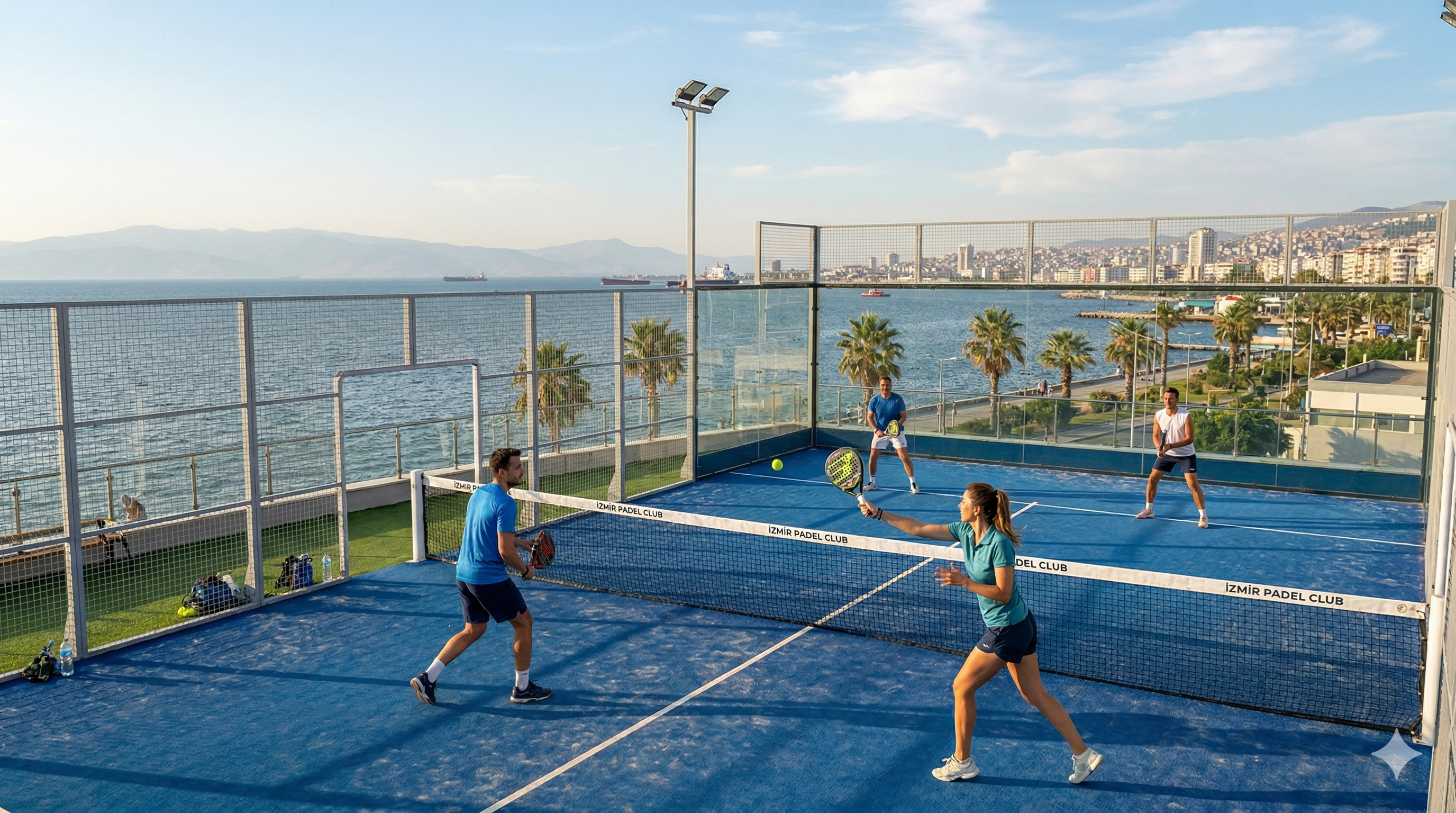
Table of Contents
What is Padel?
Padel is a racket sport combining tennis and squash, played by 4 people (in pairs of 2). Played on a special enclosed court surrounded by glass walls, padel is very similar to tennis both technically and physically — but it's more social, more accessible, and much faster to learn.
The most fundamental feature that distinguishes padel from other racket sports is that the glass and metal mesh walls surrounding the court are an integral part of the game. Just like in squash, the ball can be played after bouncing off the wall. This rule extends rallies, makes the game more exciting, and makes it essential to use brains and strategy rather than just physical strength to win.
Why Is It Growing So Fast?
- Learned much faster than tennis (2–3 sessions are enough)
- Requires less physical strength — playable at any age
- Its 4-player structure strengthens social bonds
- The enclosed dynamics of squash combine with tennis fun
History of Padel
Padel was invented in 1969 in Acapulco, Mexico by Enrique Corcuera. Since Corcuera couldn't fit a tennis court in his garden, he designed a smaller court surrounded by walls — and a new sport was born spontaneously.
After spreading to Spain in 1974, padel generated great interest there. Today, more than 20% of Spain's population plays padel regularly. It has now reached over 25 million players in more than 90 countries, and growth continues.
Padel Court Dimensions & Structure
A padel court is noticeably smaller than a tennis court. This smaller size both increases the pace of play and allows more efficient land use compared to tennis courts that require fewer players.
Court Technical Specs
Basic Rules
Padel rules are largely similar to those of tennis, but a few critical differences give the game a completely unique identity.
Service Rules
- Serve is played diagonally (like tennis)
- Ball is bounced off the ground and hit below waist
- Serve must land first in the service box
- 2 service chances are given
- Foot fault is valid during serve
Wall Rules
- If ball bounces on your court then hits wall, play continues
- If ball crosses opponent line after wall, point is lost
- Ball passing over the net must touch ground first
- Using walls in opponent's court is legal
- Ball can exit through back doors (open door rule)
Step by Step: How to Play Padel?
For someone starting padel for the first time, the process goes like this:
Form the Teams
Padel is played in pairs of 2. A total of 4 players are needed. For the inexperienced, level balance is critical — putting players of different levels on the same team makes the game more enjoyable.
Know Your Court
Examine the net dividing the court, the service boxes, and the glass walls. Walls are not an obstacle — they are part of the game.
Serve
The serving player bounces the ball on the ground and hits it diagonally to the service box below waist height. If the ball hits the net or passes through the wall of the service area, a second serve is used.
Continue the Rally
The ball must bounce only once in the opponent's area. Players can also play the ball by rebounding it off the wall. Using walls is a critical tactic both defensively and offensively.
Win the Point
A point is won if the opponent can't return the ball, if it bounces twice, or is sent out. A match consists of 3 sets and each set is played over 6 games.
Scoring System
Padel's scoring system is identical to tennis. For someone who knows tennis, learning padel's scoring requires zero effort.
| Level | Scoring | Win Condition |
|---|---|---|
| Point | 0 → 15 → 30 → 40 → Oyun | Two consecutive points at 40-40 (Deuce) |
| Game | 0 → 6 games | 6 games (7–5 or Tiebreak if needed) |
| Set | 6–0 to 7–6 | At least 2 difference or Tiebreak |
| Match | Best of 3 sets | First to win 2 sets |
Racket, Ball & Equipment Guide
Choosing the right equipment directly affects both your game performance and enjoyment. Here's what to pay attention to:
Padel Racket
- Max length 45.5 cm
- No strings, perforated surface
- Carbon, fiberglass or EVA foam
- Round (beginner), diamond (advanced) shape
- 250–400 grams weight
Padel Ball
- Similar to tennis ball but lower pressure
- Diameter: 6.35 – 6.77 cm
- FIP-approved brand recommended
- Longer lasting indoors
- Ball pressure changes with weather
Clothing & Accessories
- Tennis clothes or sports outfit
- Non-slip indoor sports shoes
- Wristband recommended
- UV protective sunglasses
- Racket strap (required for safety)
Padel vs Tennis: Which One?
If you're having trouble choosing which to start, this comparison will guide you:
| Feature | Tenis / Tennis | Padel |
|---|---|---|
| Learning Curve | 6–12 months | 2–3 sessions✓ |
| Court Size | 2.600 m² | 200 m² |
| Players | 2 or 4 | Always 4✓ |
| Social Dimension | Medium | Very High✓ |
| Physical Demand | High | Medium✓ |
| Age Limit | Youth advantage | All ages✓ |
| Equipment Cost | Medium–High | Medium✓ |
Core Techniques & Tips
Essential shots and tactics you need to know to master padel:
Bandeja
A topspin-slice hybrid shot used to send high balls in the air diagonally in a controlled way. Useful for maintaining position while keeping aerial control.
Vibora
A more aggressive version of Bandeja; the ball is sent at a wide angle and bounced off the wall in the opponent's court to create difficult angles.
Globo (Lob)
Sending the ball high and deep to break the opponent's net pressure. The most classic way to transition from defense to attack.
Bajada de Pared
Catching the ball in the air after it bounces off the back wall; one of the most technical shots unique to padel. Requires perfecting your timing.
Remate / Smash
Powerfully hitting aerial balls downward. Same concept as a smash in tennis, but in padel remember the ball can continue after hitting the wall.
Padel Courts in Turkey and Izmir
Padel is rapidly gaining popularity in Turkey. Along with metropolitan areas like Istanbul, Ankara, and Antalya, Izmir has become a focal point for padel investments due to its climate and sports culture.
Izmir Padel Courts
Izmir's coastal areas and modern districts are ideal locations for padel clubs. Today, indoor and outdoor padel courts located in Urla, Cesme, Karsiyaka, and Bornova host both professional tournaments and amateur open matches. If you are looking for a padel court in Izmir, you can find the best clubs in your area and make a reservation in seconds via the QReserve platform.
For Club Owners: Opening a Padel Club
Padel's growth in Turkey, especially in high-demand coastal areas like Izmir, creates great opportunities for both players and entrepreneurs. Strategic data to consider from a business perspective:
Padel Club Investment Summary
Avg. Initial Investment
₺2–5M / Court
Payback Period (Izmir/Istanbul)
3–5 Years
Avg. Court Hourly Rate
₺400–₺900
Target Occupancy Rate
70–80%
Factors That Increase Profitability
Digitalize Your Padel Club
Manage online booking, open match system, racket rental and Americano tournament modules on a single platform with QReserve. Increase your club's revenue and reduce operational load.
30-day trial • No credit card required
Frequently Asked Questions
Is padel hard to play?
No! Padel stands out as the fastest sport to learn among racket sports. Even someone without a sports background can play an enjoyable game in 2–3 sessions.
Are special shoes required for padel?
Not mandatory, but non-slip indoor tennis or padel shoes suitable for the artificial grass surface are preferred. Avoid running shoes.
Where can padel be played in Izmir?
There are padel facilities in many regions in Izmir, especially Urla, Cesme, Karsiyaka and Bornova. You can find the nearest court via QReserve.
How many calories does padel burn?
An average 60-minute padel match burns 400–600 calories. This number may vary depending on the pace and player level.
How long does it take to open a padel club?
After obtaining the necessary permits and ground surveys, the installation of a standard padel court takes an average of 3 to 5 weeks.
Where can I book a padel court?
You can easily book padel courts across Turkey and join open matches via the QReserve app or website.
Book Your Padel Court Today
Find the nearest padel court to you, join open matches, or manage your club with QReserve.
Start NowQReserve
All-in-one booking and management platform for Padel and Tennis clubs. Contributing to the growth of the padel community in Turkey.